
Introduction: The Interregnum and Its Creatures

Antonio Gramsci wrote: “The old world is dying, and the new struggles to be born: now is the time of monsters.” Across the globe, his words echo with uncanny precision. Old institutions — political parties, global alliances, trusted media — wobble under pressure. Shared visions of the future are scarce. In this interregnum, uncertainty breeds fear and confusion — the perfect soil for monsters to emerge.
These monsters are not always people. They are systems, ideologies, and moods that feed on instability: populist leaders who wield fear like a weapon, social media algorithms that amplify outrage, economic networks that concentrate wealth in the hands of a few, bureaucracies that reduce human lives to numbers. They thrive where freedom is narrowed to survival, consumption, or obedience. To confront them, we must ask: what is freedom when the world itself seems unmoored? How can it survive, and even flourish, amid disorder?
I. The Monsters Among Us
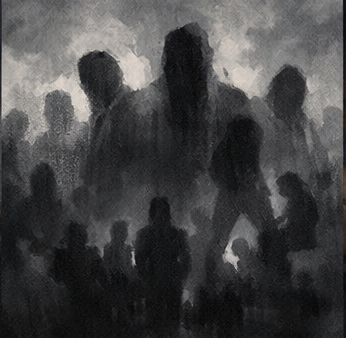
Monsters appear when old norms falter and new ones have yet to form. They are authoritarian leaders promising stability through force; ideologies that flatten moral complexity into absolutes; economic structures that leave billions powerless; and the psychological monsters of fear, conspiracy, and dehumanization.
Look around today: online echo chambers spread rage and falsehoods faster than truth; billionaires dictate politics through donations and lobbying; governments swing between repression and empty promises of liberty. What unites these monsters is their refusal to recognize human beings as more than data points, voters, or consumers. They flourish when freedom is reduced to a checkbox on a ballot or a swipe on a screen.
II. The Fragility of Freedom
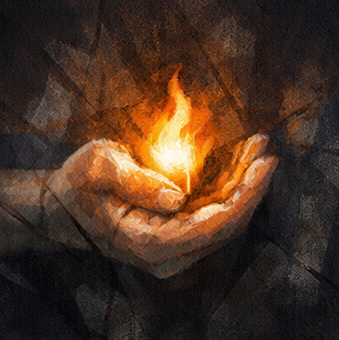
We call ourselves free, yet freedom often feels fragile. Political psychology shows that prolonged uncertainty, economic instability, or social upheaval can drive people toward submission, even in formally free societies. Elites frequently deploy the language of freedom — “free markets,” “individual choice,” “personal responsibility” — while simultaneously stripping away the material and social conditions that make genuine choice possible: access to education, healthcare, economic security, and political agency. In such contexts, freedom risks becoming a hollow promise, more a slogan than a lived reality.
The paradox is stark: we are told we are free, yet we often feel powerless, constrained by circumstance, inequality, or the inertia of institutions. Negative liberty — freedom from interference — may persist, but positive liberty — the capacity to shape one’s own life and society — is steadily eroded. This fragility shows that freedom is not merely a legal status or a rhetorical claim; it is a practice that must be nurtured, protected, and exercised. The challenge, then, is not simply to claim freedom in words, but to make it lived, tangible, and resilient in the everyday struggles of work, community, and civic life.
Fragile freedom demands attention to the conditions that sustain it. It calls for vigilance against both overt oppression and subtle structures of power that limit agency. Only by strengthening the material, social, and political foundations of autonomy can freedom move from abstraction to reality, allowing individuals and communities to act meaningfully, creatively, and responsibly.
III. Freedom as Moral Autonomy: Kant

Immanuel Kant saw freedom as autonomy: the ability to act according to principles one could will as universal law, which grounds moral responsibility. In a world of monsters, this is radical. Authoritarian systems demand obedience; Kantian freedom demands responsibility. Even when institutions fail, even when fear surrounds us, each human being retains the capacity to act with conscience, to refuse complicity, and to make choices that reflect universal moral principles rather than expedience or coercion.
Consider a civil servant who quietly refuses to falsify data, a judge who upholds justice despite political pressure, or an individual who intervenes to protect the vulnerable when society looks away. These acts may be small, even invisible, yet they exemplify Kantian freedom in practice: they assert moral law over fear, conscience over authority. In this sense, freedom becomes a daily, concrete act of integrity.
Yet Kantian freedom alone can feel abstract. It provides a compass in stormy seas, offering direction but not a lifeboat. It does not eliminate the monsters that roam political systems, social networks, or economic structures. What it does do is preserve the possibility of resistance, of ethical action, and of human dignity — even in situations where survival, conformity, or despair might seem easier. Kant reminds us that the foundation of freedom is moral clarity: the courage to act rightly, even when the world conspires against it.
IV. Freedom as Social Emancipation: Marx
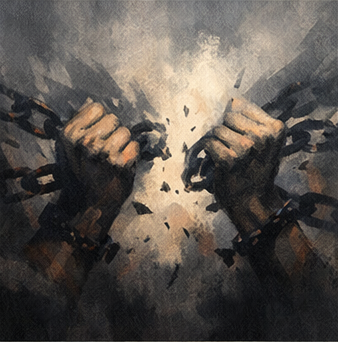
Karl Marx understood freedom as liberation from material necessity. A person who must sell their labor simply to survive is not fully free; their choices are constrained by economic compulsion. Economic monsters — global inequality, exploitative labor markets, wealth concentration, and the commodification of human life — hollow out freedom even in societies that grant formal political rights. People may vote, speak, or protest, yet if they are trapped by poverty, debt, or structural injustice, their freedom remains severely limited.
Consider factory workers whose long hours leave no space for reflection or creativity, gig workers navigating unpredictable platforms, or communities denied access to quality education and healthcare. In these conditions, the ability to act meaningfully, to pursue one’s goals, and to participate fully in civic life is compromised. Marx’s insight is that freedom is not merely legal or formal; it is material, social, and practical.
History also warns us that attempts to enforce freedom through rigid planning, whether ideological or bureaucratic, often become another form of domination. True freedom arises where social conditions allow individuals to make choices, exercise creativity, and live with dignity. It is nurtured by equitable access to resources, meaningful work, and supportive communities — conditions that give people the real capacity to act autonomously, rather than simply survive.
V. Freedom as Existential Responsibility: Sartre, Fromm, and Arendt
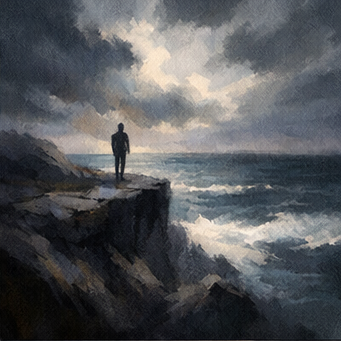
Jean-Paul Sartre famously claimed that humans are “condemned to be free.” Even under oppression, even when choices seem limited or dangerous, we retain responsibility for our actions. This insight preserves human dignity in the darkest circumstances: it reminds us that even in situations of extreme constraint, we can still decide how to respond, how to act, and what kind of person to be. Freedom, in this sense, is inseparable from moral accountability; it is what allows us to maintain integrity when external conditions seem overwhelming. Yet Sartre’s vision also risks isolating freedom from the social world. Choosing responsibly is often constrained by material needs, social pressures, and the webs of power around us, which means that exercising freedom is rarely a purely abstract, solitary act.
Erich Fromm deepens this understanding by explaining why monsters find fertile ground: people often flee freedom when it feels overwhelming. The weight of choice, the anxiety of responsibility, and the uncertainty of the future can drive individuals toward authority, conformity, or distraction. Fear, resentment, and alienation are not just political tools; they are psychological currents that draw us into obedience or passivity. In other words, monsters thrive not only because they are imposed from above, but because they are invited by human vulnerability.
Hannah Arendt adds a crucial political and social dimension. In The Origins of Totalitarianism, she observed that totalitarian systems exploit isolation, atomization, and the collapse of public spaces where individuals act together. Freedom, she argues, requires a public sphere in which people can speak, act, and relate to one another. When social bonds erode and individuals feel disconnected from community and politics, the psychological and structural conditions for monsters to thrive emerge. Arendt reminds us that freedom is not only an inner moral stance; it must be enacted in relationship with others, in spaces where speech and action can resist domination.
Together, Sartre, Fromm, and Arendt reveal a multi-layered picture: freedom is both a personal responsibility and a social achievement. It requires courage to act morally, resilience against the temptation to escape into passivity, and the creation of vibrant communities that prevent isolation. Monsters emerge where responsibility, connection, and public engagement fail; freedom flourishes where people choose, together, to act, speak, and resist.
VI. Freedom as Creative Spirit: Berdyaev
Nikolai Berdyaev casts freedom as a creative act — spiritual, unpredictable, irreducible. It is found not in permission, law, or wealth, but in acts of conscience, love, and creation. This freedom cannot be standardized, controlled, or monetized, which is why monsters fear it: it escapes systems of power and refuses to be turned into a tool for domination.
Consider whistleblowers exposing corruption, journalists reporting in dangerous conditions, artists imagining new worlds, or community organizers creating spaces of care in neglected neighborhoods. These are small, risky acts of freedom that ripple outward, defying objectification. Each act asserts the humanity of both actor and witness, reminding us that life is not reducible to function, consumption, or obedience.
In a world dominated by rigid institutions, bureaucracies, and ideologies, true freedom emerges as events — flashes of creation, refusal, conscience, and solidarity. It is a freedom that transforms the ordinary into the extraordinary: a conversation that questions norms, a gesture that resists oppression, a work of art that challenges perception. Berdyaev’s vision shows that freedom is not a static possession but a lived, active force, capable of breaking the hold of monsters from within the everyday.
VII. Freedom in the Interregnum
Philosophy offers a sober truth: freedom cannot save humanity as a system, nor can it engineer utopia or guarantee a perfect society. Systems are fragile, institutions are fallible, and the forces of fear, greed, and violence are persistent. Yet freedom has a quieter, more enduring power: it can prevent humanity from surrendering entirely to monsters. It achieves this through subtle but profound acts that ripple outward, shaping the moral and imaginative life of individuals and communities alike.
Freedom, then, does not eliminate monsters. It does not expel them from politics, economics, or culture. But it limits their reach, denies them total victory, and ensures that the world is never entirely closed to possibility. In practicing freedom — by recognizing humanity, exercising moral responsibility, and nurturing creative acts — individuals and communities maintain a space that monsters cannot fully occupy. In this space, the future remains open, and the emergence of a new world, however uncertain, becomes conceivable.
Conclusion: Freedom Without Guarantees
In the time of monsters, freedom is neither easy nor safe. It is the choice to speak truth when silence is simpler, to help a neighbor when fear urges withdrawal, to act according to conscience even when institutions fail. Freedom cannot be granted by governments, guaranteed by laws, or stored like a commodity. It is earned moment by moment, in ordinary decisions and small acts of courage.
The old world is falling apart, and the new has yet to emerge. Monsters — authoritarian leaders, rigid ideologies, economic greed, and social apathy — fill the void. Yet as long as people insist on seeing one another as human, take responsibility for their actions, and create new spaces of connection and meaning, the future remains open.
Freedom does not promise safety or salvation. It offers choice, creativity, and the possibility to shape life even in adversity. And in an interregnum, possibility is itself an act of resistance.